CONTROL & ESTIMATION / SIMULATION PROJECTS
Advanced Vehicle and Quadcopter Control
I compared vehicle tracking controllers and showed that adaptive quadcopter control retained stable height tracking at 70% single-motor thrust loss, where LQR could not.
My roleVehicle controller and estimator development; quadcopter model-reference adaptive control and simulation comparison.
01 / ENGINEERING PROBLEM
Track a path as the dynamics change
The ground-vehicle study compared tracking and state-estimation approaches on a road course. The quadcopter study examined how a controller responded when one motor lost thrust. I used simulated motion and response plots to compare nominal tracking with behavior under the fault.
02 / METHODS & ANALYSIS
Tracking, estimation, and fault response
Simulation recordings and response plots
Click images to enlarge
Follow the ground-vehicle trajectory
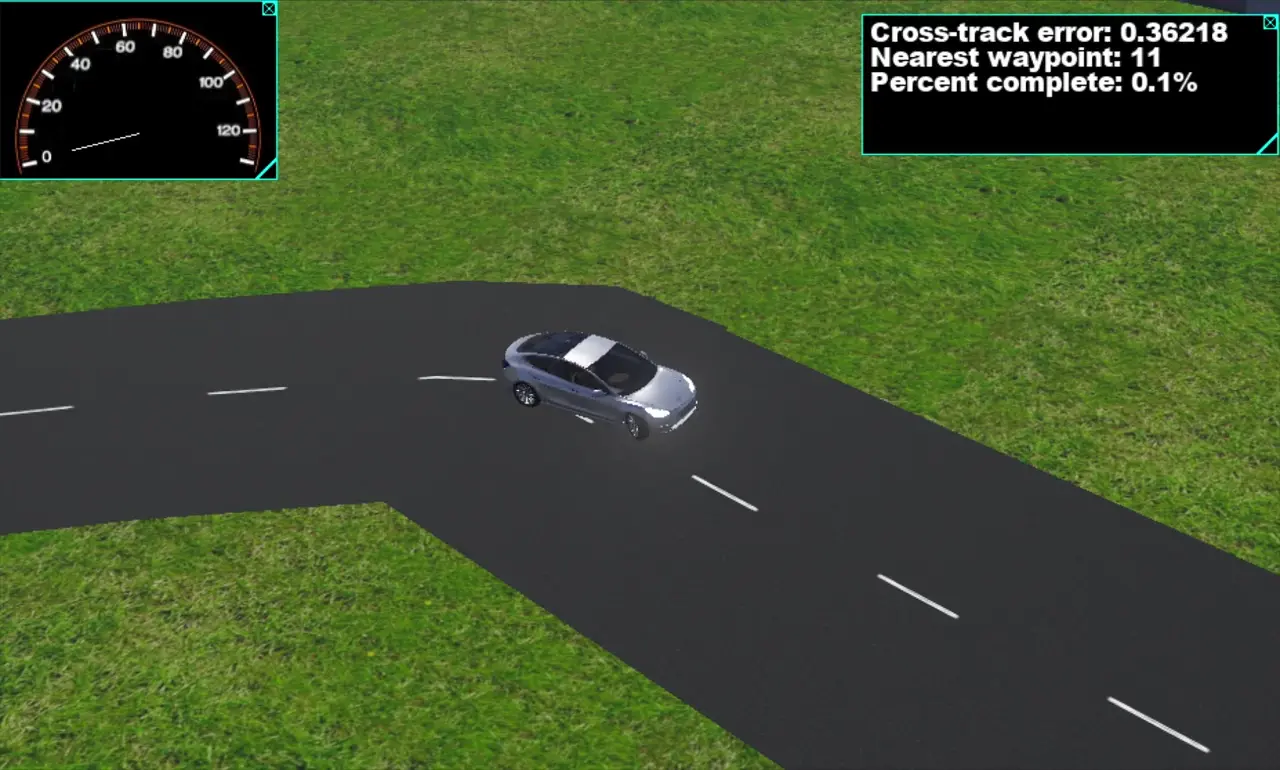
I compared PID, LQR, and MPC control and used an extended Kalman filter for localization. The recording shows a tracking run; it is a qualitative demonstration, not a controlled ranking of the three controllers.
Compare LQR and MRAC under thrust loss
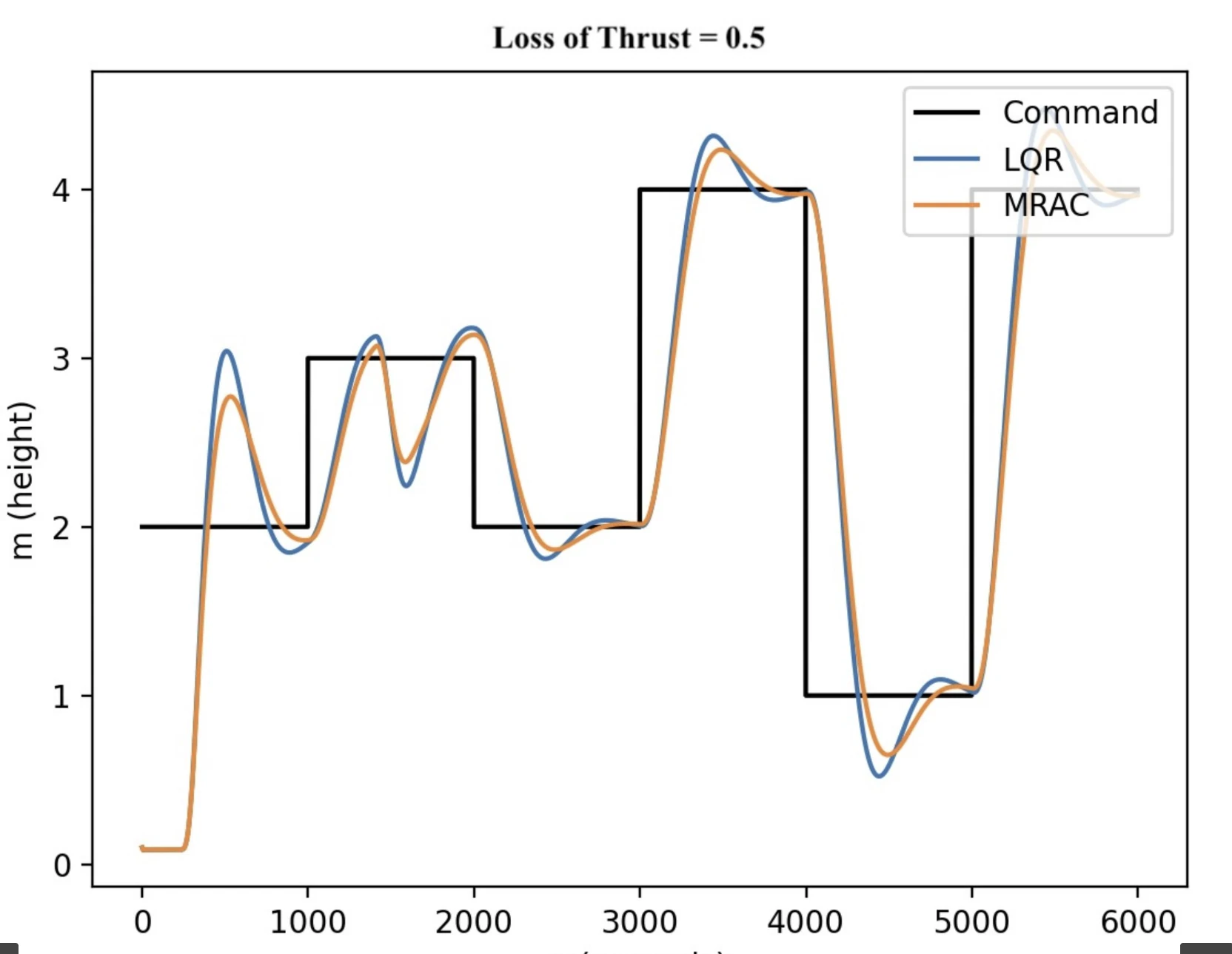
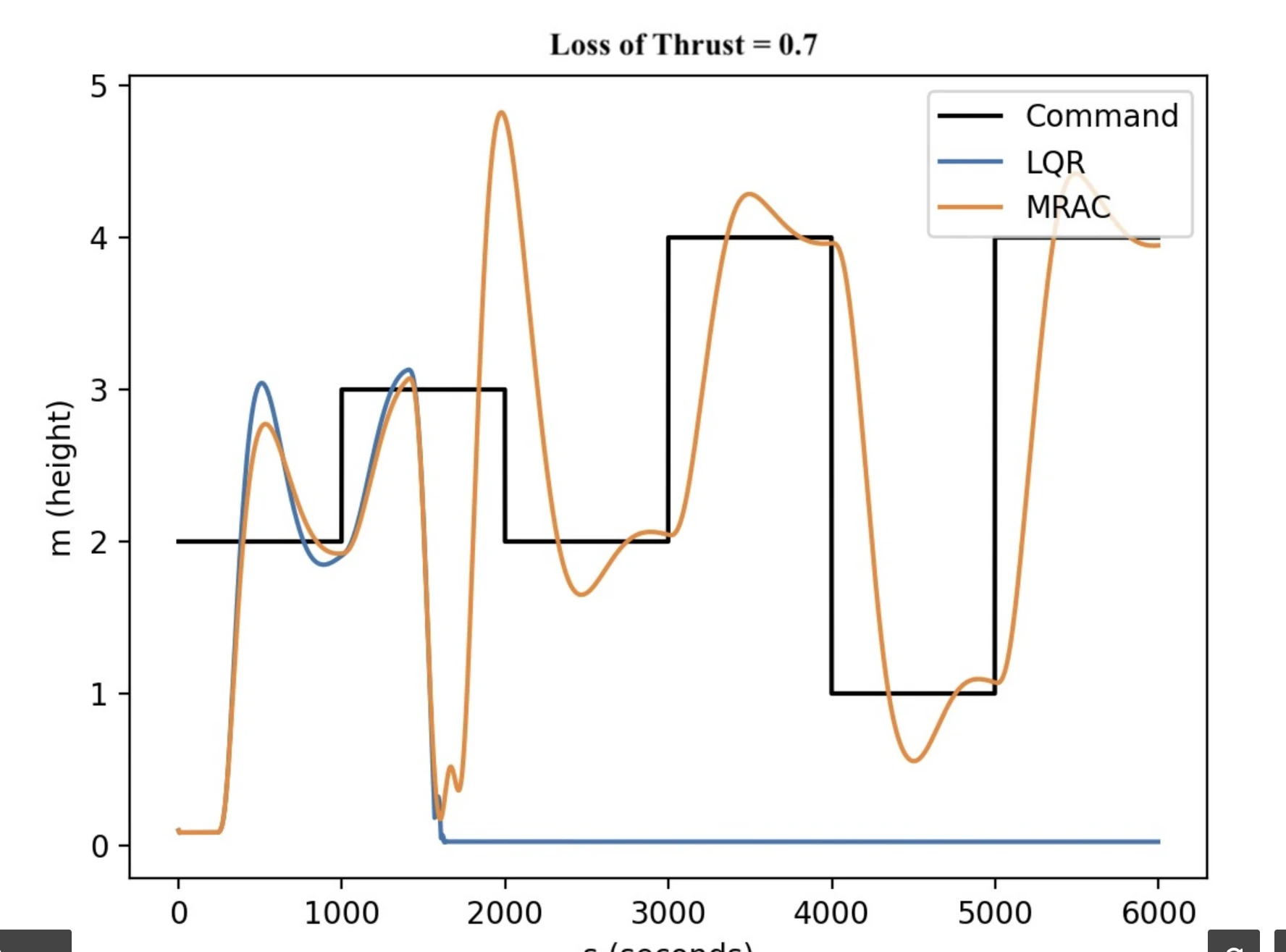
I compared a linear-quadratic regulator (LQR) with model-reference adaptive control (MRAC) at 50% motor thrust loss, then increased the loss to 70%. Both tracked at 50%; at 70%, LQR could no longer provide stable tracking, while MRAC still could.
03 / RESULTS & OUTCOME
Adaptive control retained tracking at 70% thrust loss
The simulations demonstrated ground-vehicle path following and the benefit of adaptive control under a larger quadcopter motor fault. MRAC maintained stable height tracking at 70% thrust loss, though its response showed larger transients. These results have not been validated in physical flight.