UNIVERSITY OF MICHIGAN / RESOURCEFUL MANUFACTURING & DESIGN LAB
Through-Die Cooling for Aluminum Extrusion
I modeled and bench-tested an insulated cooling channel to limit heat loss from a hot extrusion die while preserving a path for internal cooling.
My roleAbaqus thermal analysis, experimental setup, cooling trials, and comparison of insulation strategies.
01 / ENGINEERING PROBLEM
Cool the extrusion without overcooling the die
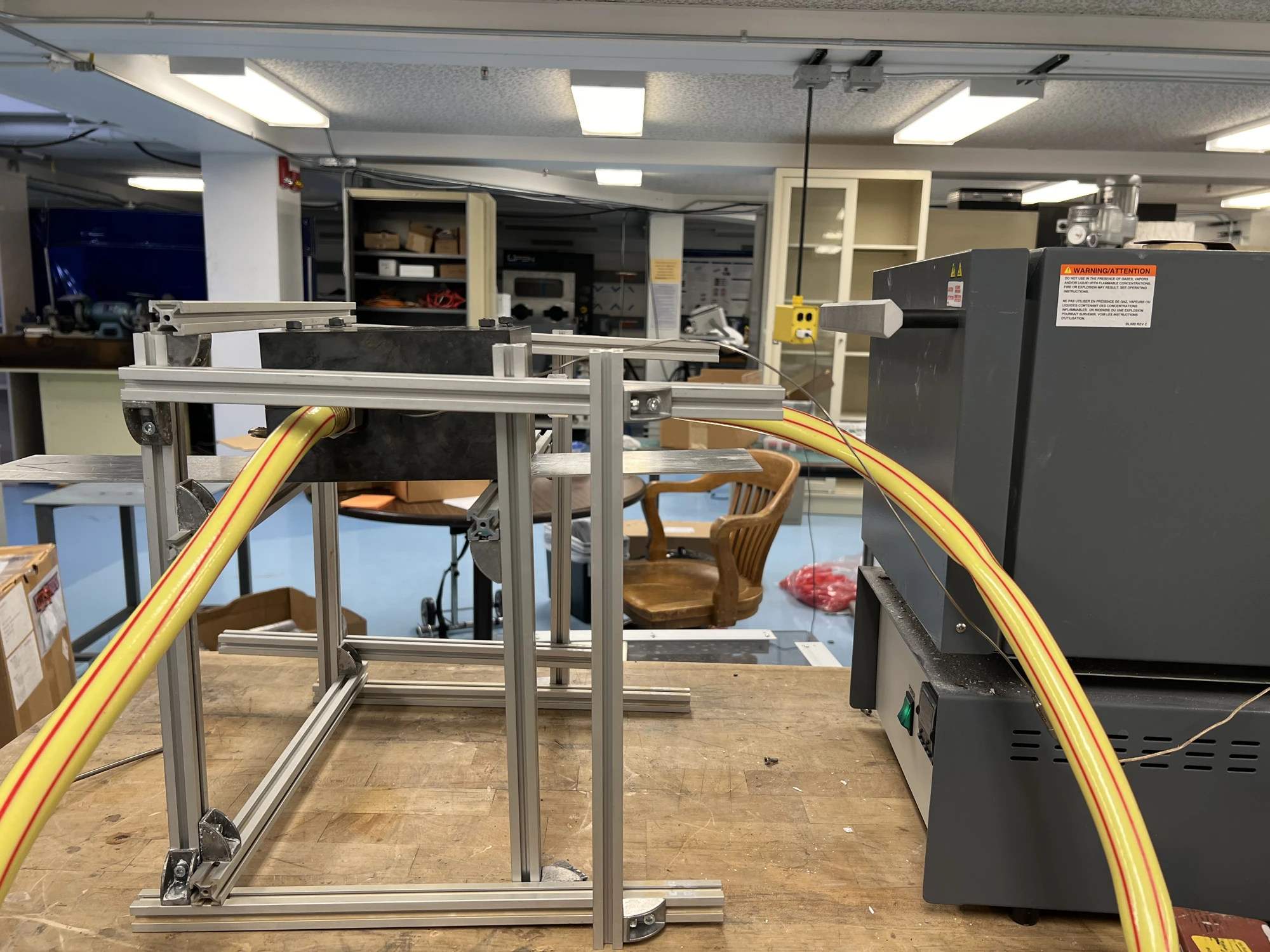
Internal quenching can reduce temperature differences across an aluminum profile, but coolant passing through the die can also remove too much heat from the steel. I investigated insulation between the channel tube and die to control that unwanted heat transfer. A heated steel test block provided a practical way to examine the thermal behavior.
02 / METHODS & ANALYSIS
Thermal model and bench comparison
Project figures and hardware
Click images to enlarge
Separate the coolant from the hot die
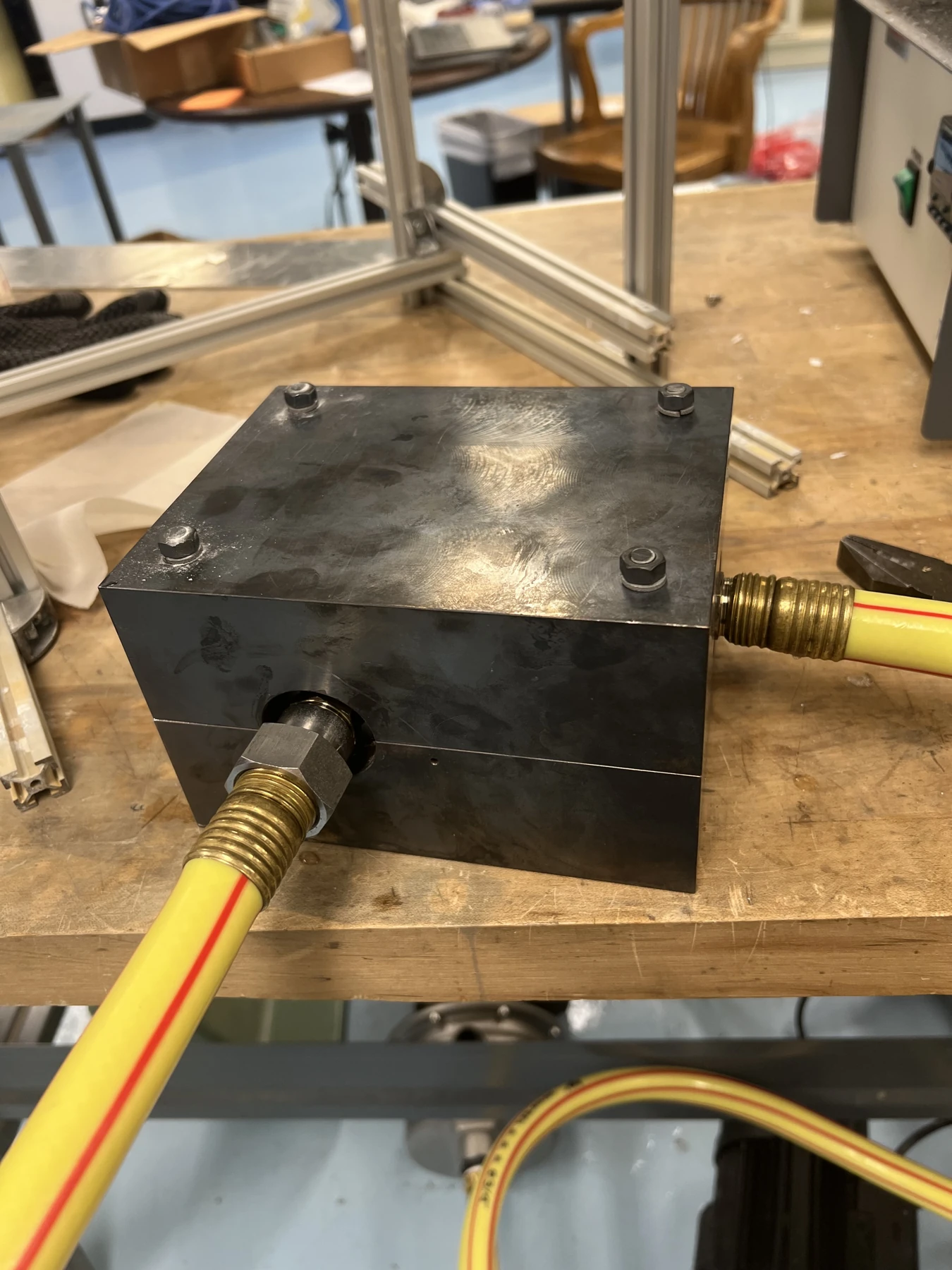
I compared an uninsulated channel with alumina and calcium aluminum silicate insulation. The model represented the steel, insulating layer, and coolant tube separately so the effect of the insulation could be assessed against the same initial conditions.
Set the thermal conditions and check them experimentally
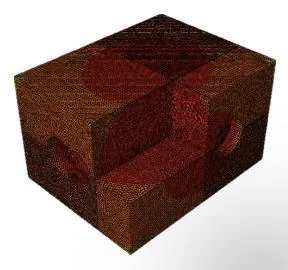
- Thermal model450 °C initial die; 25 °C surroundings
- Heat-transfer boundaries25 W/(m²·K) air; 20,000 W/(m²·K) coolant
- Bench checkThermocouple cooling traces and timed coolant collection
I used transient FEA to compare cooling histories, then checked cooling trends on the physical rig. Timed collection gave flow rates of 0.356–0.361 kg/s. Heating conditions, adapter losses, and thermocouple contact limited a direct model-to-test comparison.
03 / RESULTS & OUTCOME
Insulation reduced predicted die cooling
Predicted die temperature after 3,600 s
Same initial temperature: 450 °C
Both insulation materials slowed predicted die cooling relative to the bare channel. Bench tests checked flow and temperature trends, but did not establish production extrusion quality or a quantified model-error bound. The next comparison should control heat input and sensor contact more closely.