ROBOT MANIPULATION / SIMULATED BARRETT WAM
7-DOF WAM Manipulation and Control
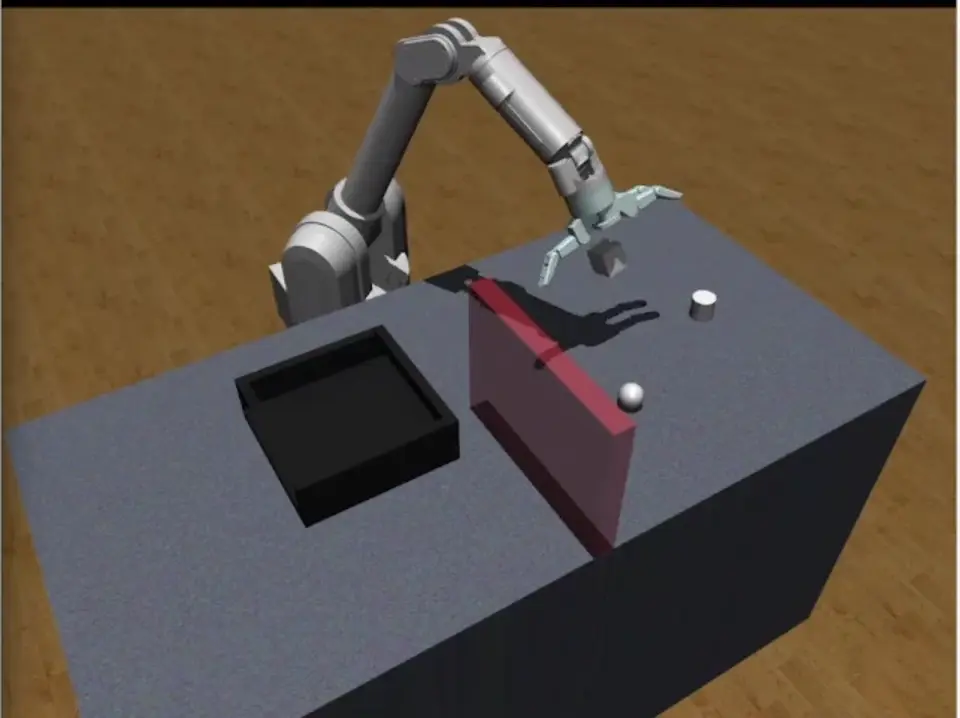
I combined collision-aware planning and joint-torque control for a seven-axis arm, with torque commands communicated at 500 Hz.
My roleAutonomous manipulation algorithms, trajectory planning, and integration of joint-torque commands with state feedback.
01 / ENGINEERING PROBLEM
Plan and execute motion around clutter
The simulated arm needed to move objects through a workspace containing obstacles. Planning a usable path was only part of the task: execution also needed joint-torque commands and continuing state feedback. I integrated these parts into a closed-loop manipulation workflow.
02 / METHODS & ANALYSIS
From a planned path to controlled motion
Frames and excerpt from the supplied replay
Click images to enlarge
Plan through the manipulation workspace
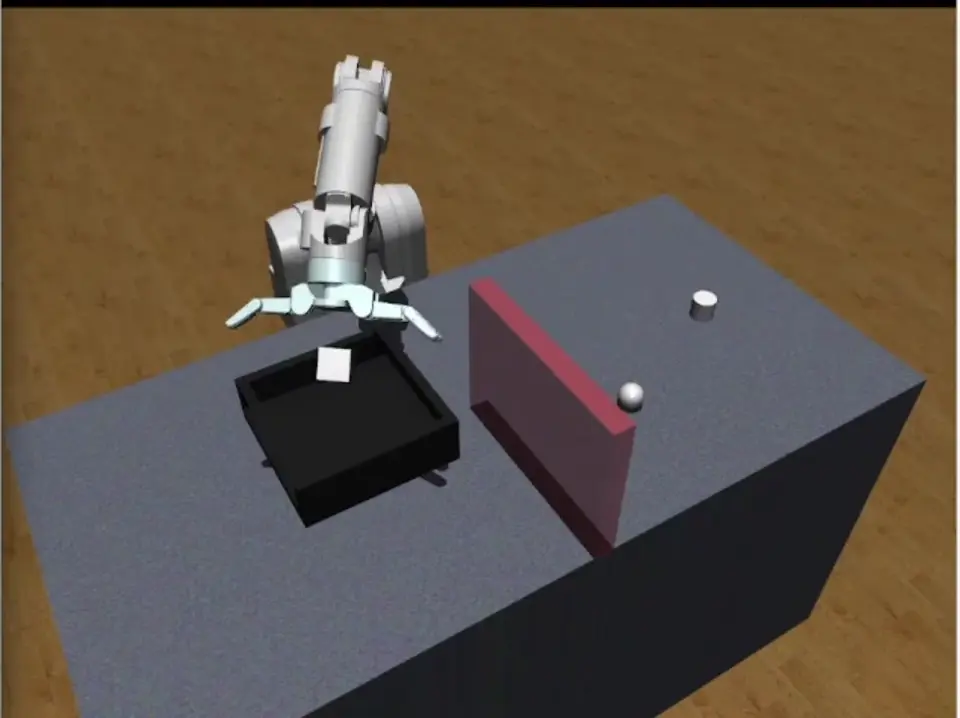
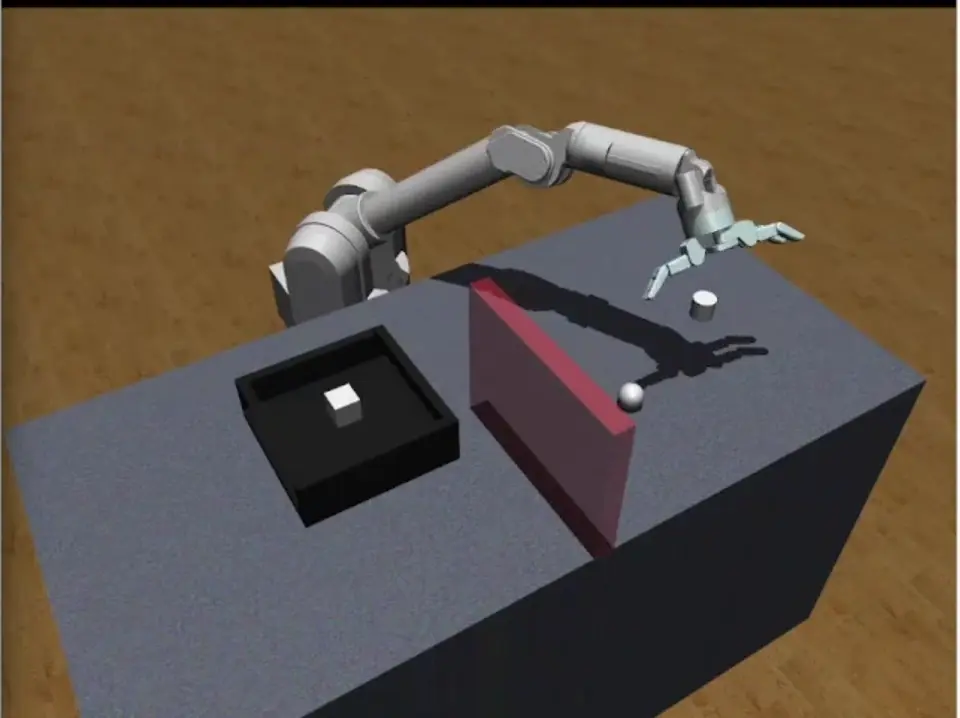
I developed collision-aware trajectories for the arm in the cluttered scene. These frames show different poses from the same replay; the geometry of the bin, barrier, and objects constrained the motion.
Connect the trajectory to torque control
- PlanCollision-aware trajectory
- CommandJoint-torque updates · 500 Hz
- SimulateSeven-axis arm dynamics
- Feed backRobot state returns to the control loop
I combined planned motion with joint-torque commands and robot-state feedback. Torque commands were communicated at 500 Hz, while state feedback connected execution to the planned motion.
03 / RESULTS & OUTCOME
Closed-loop manipulation replay
The supplied replay demonstrates the integrated planning-and-control workflow moving the arm around the tabletop scene. It supports a qualitative manipulation result; repeatability, collision-clearance margins, and physical-robot performance were not quantified in the supplied materials.