Simba GaoMECHANICAL / MECHATRONICS
← All projects

CMU HACKERFAB / PROCESS EQUIPMENT

HackerFab Atomic Layer Deposition System

Operating and troubleshooting a custom HfO₂ deposition tool across vacuum, gas delivery, instrumentation, and thermal control.

My role Teaching assistant · tool operation, subsystem troubleshooting, cycle automation, and film characterization.
  • Vacuum systems
  • Gas delivery
  • Thermal control
  • Instrumentation
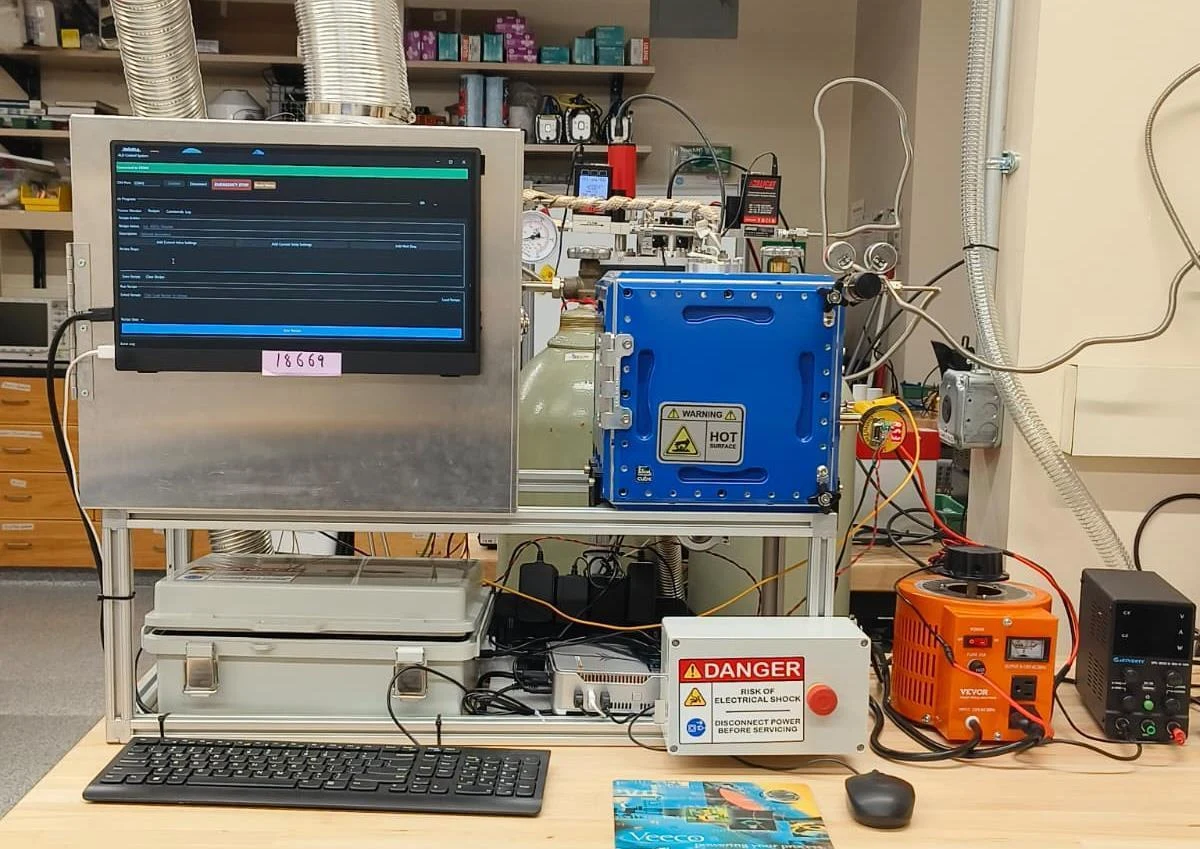
HackerFab Atomic Layer Deposition System showing the recipe interface, process chamber, gas plumbing, pressure instrumentation, and control hardware.
Custom process tool · ongoing HfO₂ development
250+ cyclesVerified automated execution
2–3 mTorrResolved pressure transients
±2 °CReported ampoule regulation

01 / ENGINEERING PROBLEM

Making the tool ready
for deposition

The custom tool alternates precursor doses and purges over a heated wafer. Reliable operation depends on vacuum, pneumatic valves, heated delivery lines, and low-level sensor signals working together. I helped operate and troubleshoot these subsystems, analyze process traces, execute recipes, and check whether the trials produced a film.

02 / METHODS & ANALYSIS

Hardware and process diagnostics

Equipment, wiring, and measured traces
Click any figure to enlarge

01

System integration

Gas & precursorsN₂ MFC · H₂O · Hf source
Pneumatic valvesTimed dosing
Process chamberHeated wafer · pressure gauge
Vacuum pumpEvacuation & purge

GUI → Arduino → valve sequencing & heater control Thermocouple + pressure feedback
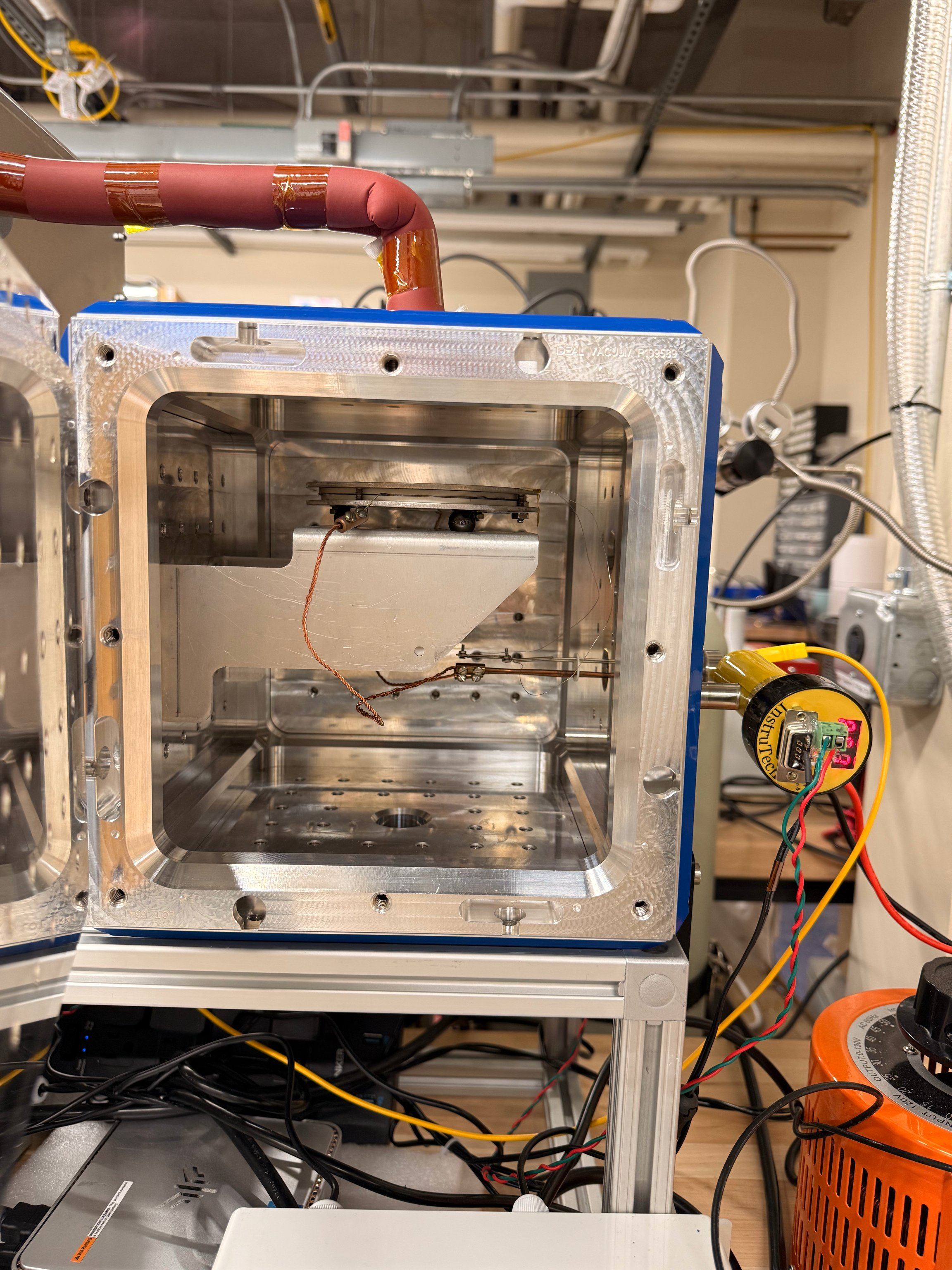
Open ALD process chamber with substrate heater, surrounding plumbing, thermocouple leads, and power hardware.

Chamber and heater hardware

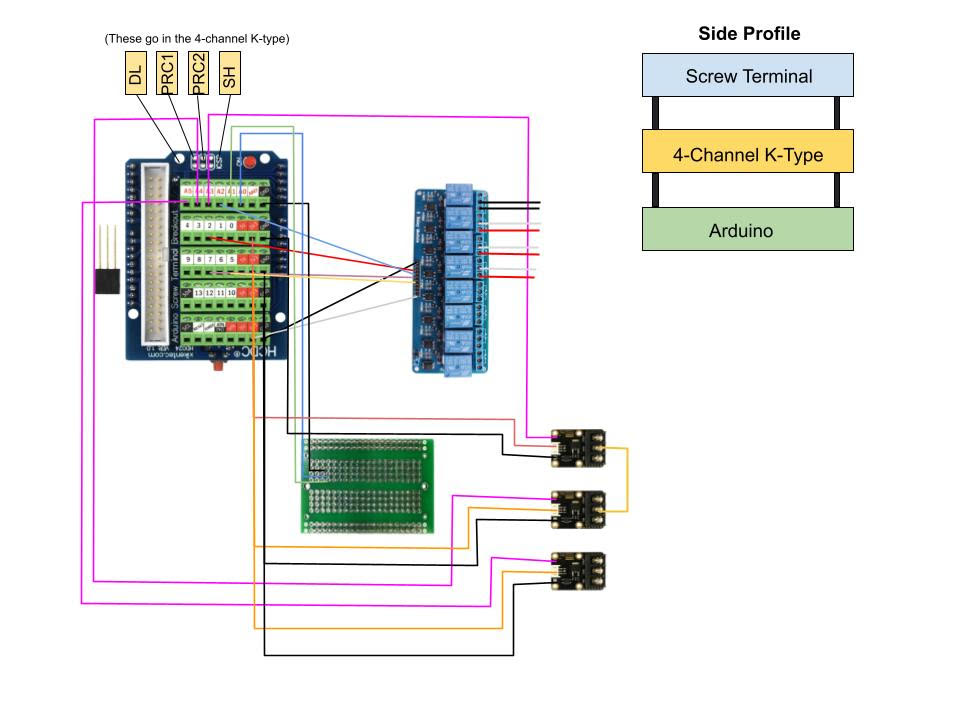
Source wiring diagram of the Arduino, thermocouple modules, relay board, and terminal connections.

Controls wiring · partial system diagram

Relay switching disturbed thermocouple readings. Wiring reconstruction, ground checks, and thermocouple isolation restored independent channels during verification; long-term electrical robustness remained open.
02

Resolving small pressure pulses

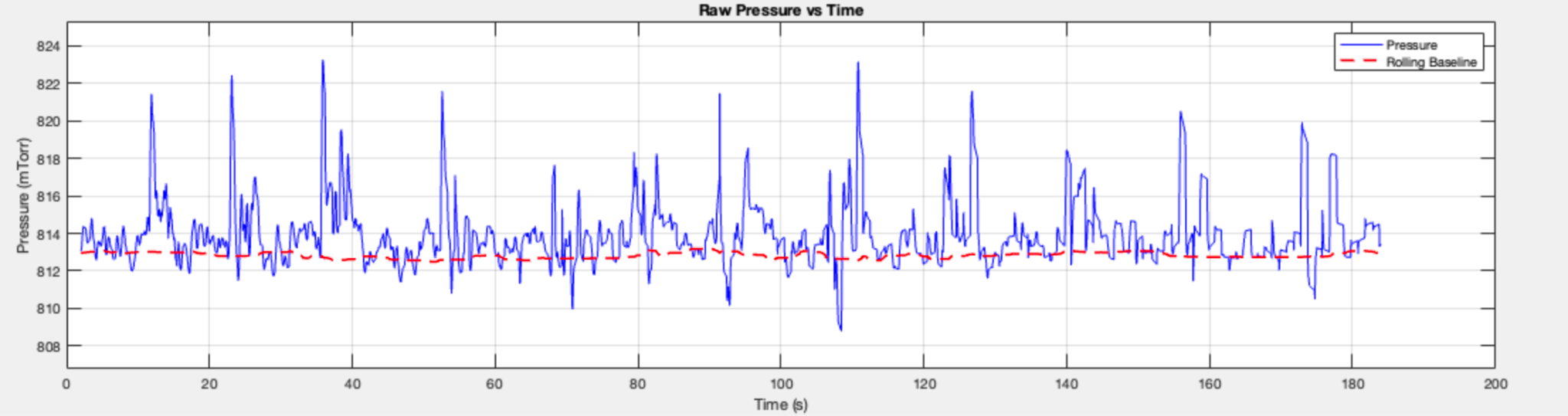
Recorded pressure versus time near 800 mTorr, with repeated water-vapor pulses above the baseline.
ORIGINAL SIGNAL~8 mTorrPeak-to-peak noise · pulses obscured
AFTER SIGNAL CONDITIONING<2–3 mTorrReported noise · pulses detectable
Broadband noise prompted electronics and ADC checks. Increasing averaging from 3 to 100 samples per reading and adding a real-time moving average made small delivery pulses resolvable.
03

Thermal response and regulation

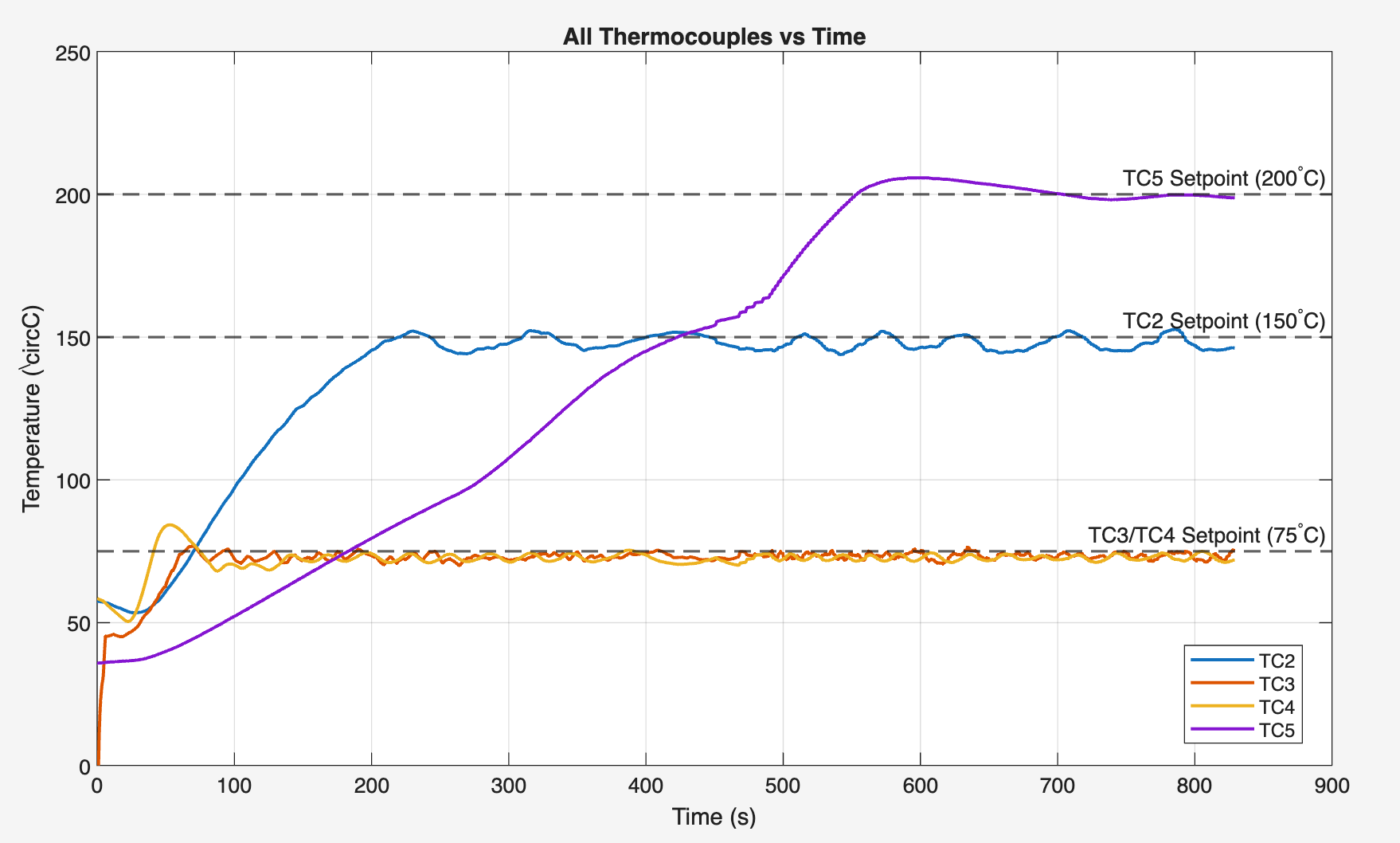
Measured thermocouple traces approaching nominal setpoints of 75 °C for source channels, 150 °C for the delivery line, and 200 °C for the substrate.

Simultaneous heater traces · measured temperatures

DELIVERY-LINE TUNING AT 120 °C
~30 °CInitial overshoot
±5 °CRegulation after changes

Silicone-foam insulation
+ trend-based on/off control

Insulation and switching based on temperature trend reduced delivery-line overshoot. Stable external readings still did not establish the precursor’s internal temperature, a key uncertainty in vapor delivery.
04

Automated process execution

BEFORE STARTHeat & stabilize
  1. H₂O dose
  2. N₂ purge
  3. Hf precursor dose
  4. N₂ purge
REPEAT250+ cycles
The recipe interface sets temperatures, pulse durations, purges, and cycle count. Extended automated execution was verified separately from film-growth success.

03 / RESULTS & OUTCOME

Deposition checks

HARDWARE TESTED · FILM GROWTH UNCONFIRMED
TRIAL 1180 cycles

Reflectometry:
no measurable film

TRIAL 2103 cycles

Pre-coated wafer:
inconclusive

TRIAL 350 cycles

Pre-coated wafer:
inconclusive

TRIAL 4 · BARE Si70 cycles

XRR:
distinguishable fringes

Pressure sensing, thermal control, and automation supported repeated trials. Reflectometry was limited by the optical model and pre-existing films. XRR showed distinguishable fringes, but film deposition is not yet fully confirmed; the issue is currently being diagnosed this semester.

Project documentation ↗