ASML-SPONSORED / UNIVERSITY OF MICHIGAN MDP
ASML DUV Stage Rolling Loop Test Rig
I helped build a rolling-loop test rig for ASML DUV stage research, reaching 100 m/s² acceleration with 9% mass accuracy.
My roleMechanical design and construction within the five-person team; contributed to integrated testing and data analysis.
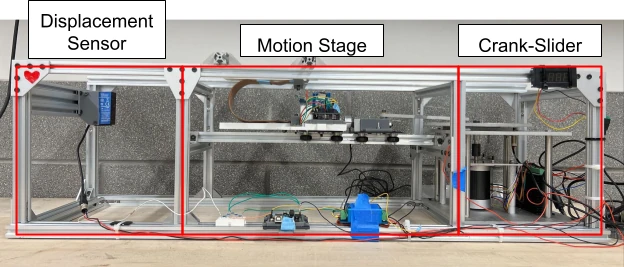
01 / ENGINEERING PROBLEM
Measuring the load of a moving cable
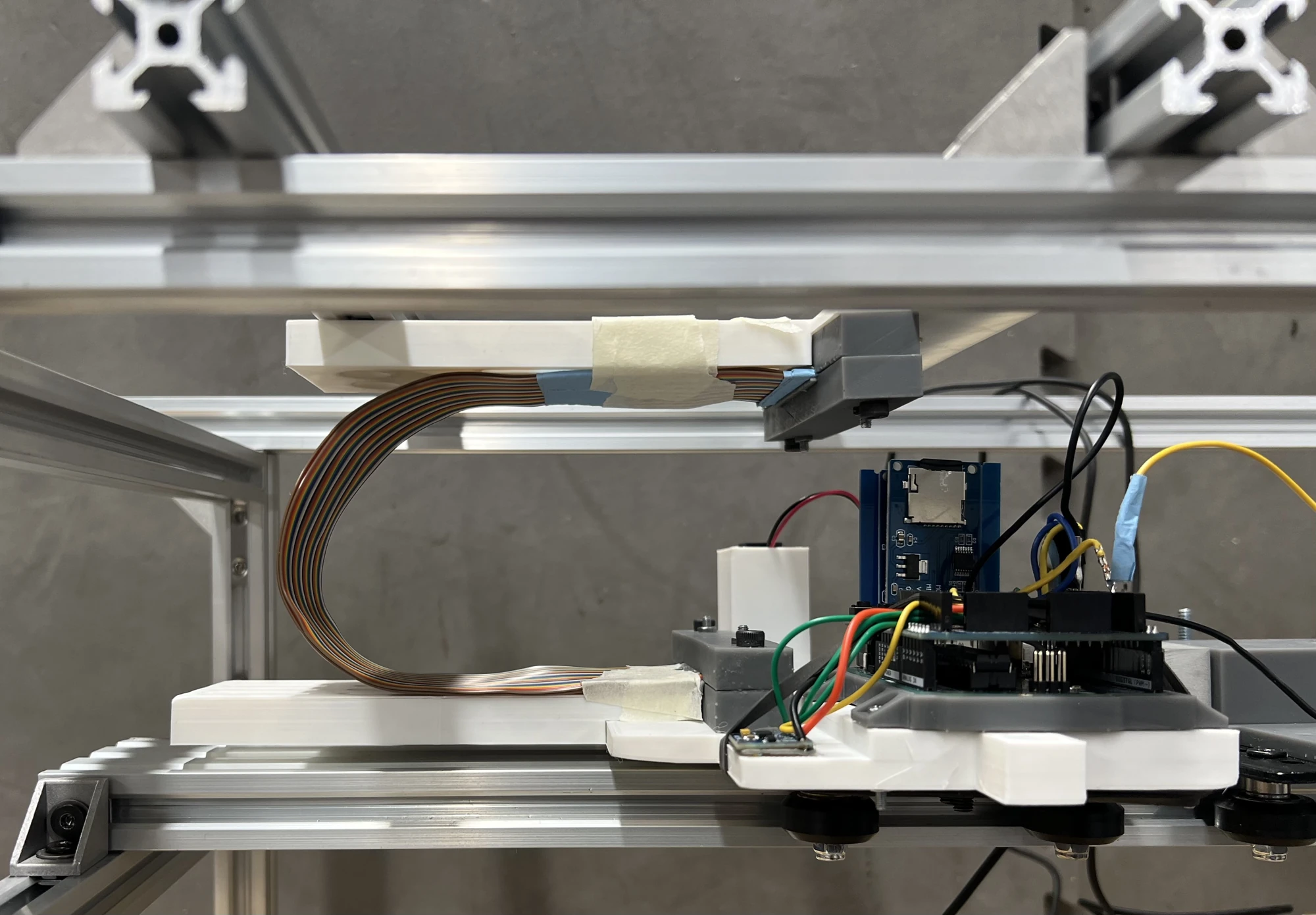
ASML’s rolling loops deform as a precision stage moves, changing the load seen by its drive. We needed a scaled fixture that could reproduce rapid motion while recording force and displacement. The challenge was separating cable behavior from fixture vibration and sensor error.
02 / METHODS & ANALYSIS
Mechanism, sensing, and measurement
Project figures and hardware
Click images to enlarge
Generate the required motion
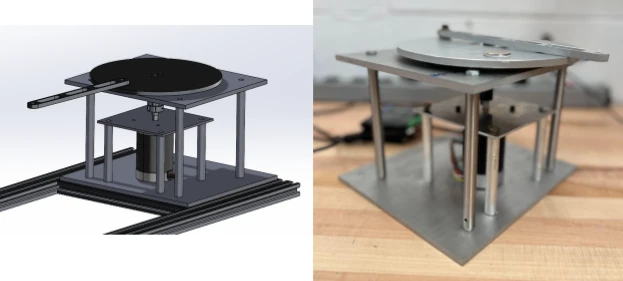
I worked on the crank-slider fixture because commercial stages meeting the acceleration target exceeded the budget. A 75 mm crank radius, 200 mm connecting rod, and 300 rpm operating point set the intended motion.
Integrate sensing on the moving carriage
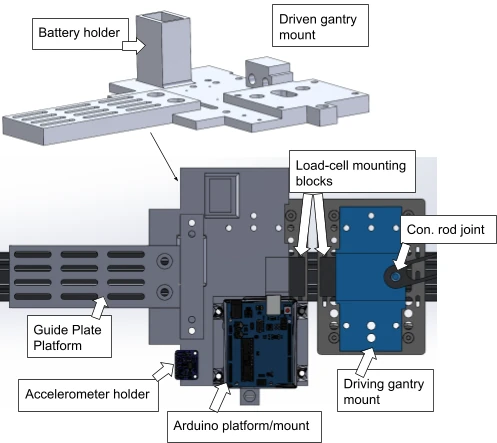
- ForceLoad cell between the carriages
- PositionStationary laser distance sensor
- AccelerationOnboard accelerometer; displacement-derived estimate used in final results
The team combined force, position, and acceleration measurements with onboard logging. When the accelerometer proved unreliable during high-g motion, the final analysis used derivatives of filtered displacement; this made mechanical stability and filtering especially important.
03 / RESULTS & OUTCOME
Motion and mass measurement results
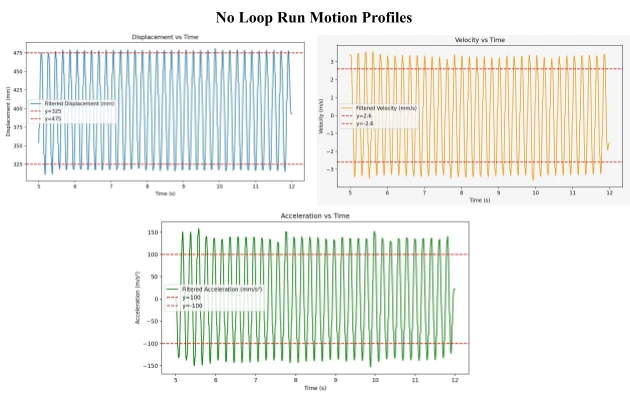
The rig reproduced the required stage motion and achieved 9% mass accuracy. Force and displacement measurements supported the characterization of rolling-loop behavior across three cable configurations.